Exhibition on Paul Signac in the Kunsthal
July 15, 2026
He was a painter, theorist, and networker, as well as the driving force behind the innovative, 19th-century art movement Neo-Impressionism. From Saturday 24 October 2026, Kunsthal Rotterdam will be dedicating a large-scale retrospective to Paul Signac (1863–1935). With over ninety works by Signac and some of his contemporaries, Signac. Symphony of Colours shows his wide-ranging influence and explores why his work and ideas continue to find resonance to this day.
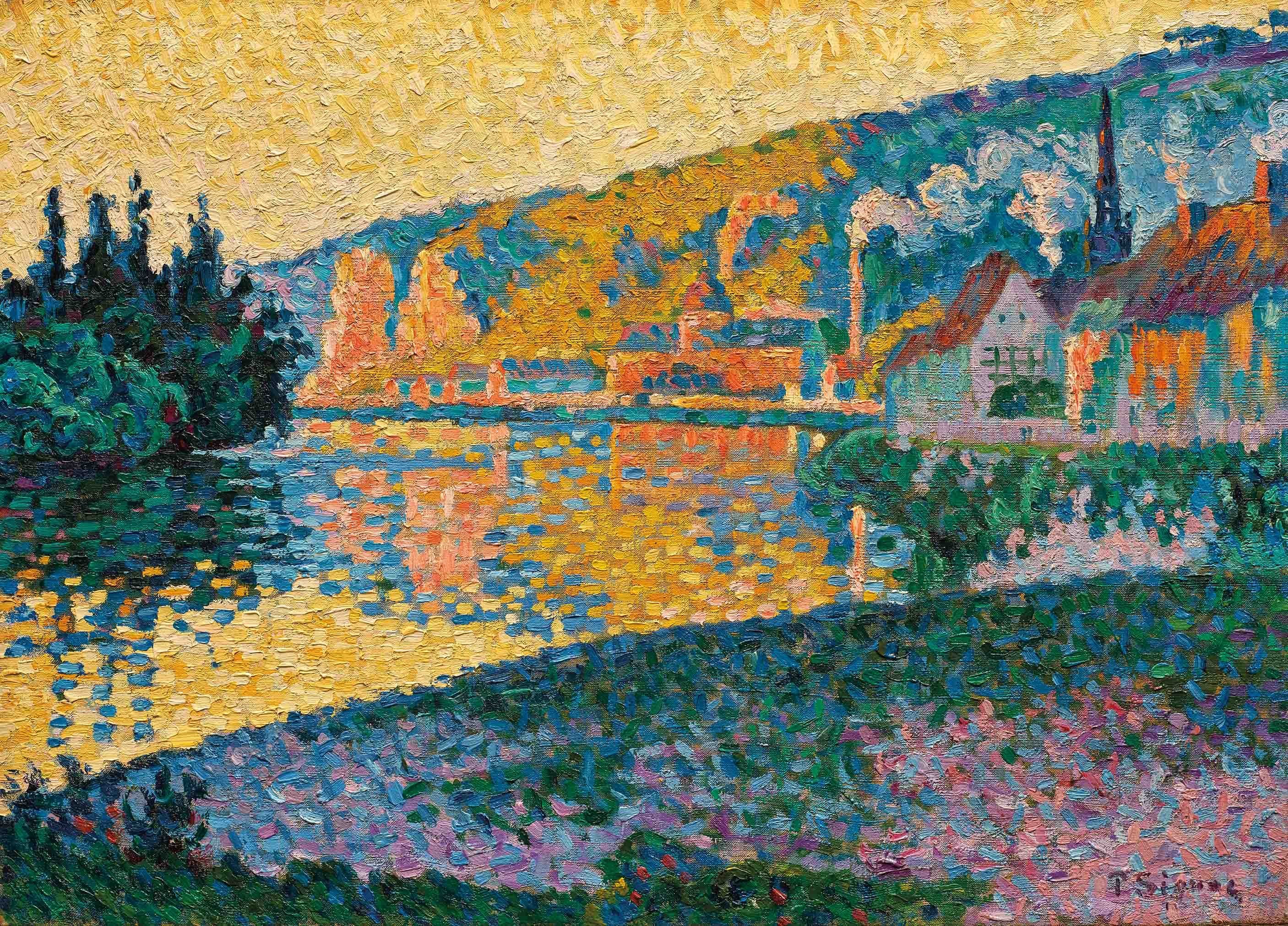
Visitors can follow Signac’s development through lively port views, colourful landscapes, and carefully composed portraits. One of the highlights is the sun-drenched painting Le Port au soleil couchant, Opus 236 (1892). Also displayed is Le port de Rotterdam (1907), inspired by a visit to the Netherlands. The exhibition furthermore zooms in on the key role Signac played in the Neo-Impressionist movement, not only as a painter, but also as a writer, ambassador, collector, and mentor. By inspiring young artists and organising exhibitions, he played an active role in extending the international outreach of Neo-Impressionism. Apart from around thirty works by Signac himself, the exhibition features paintings by artists like Lucie Cousturier, Henri-Edmond Cross, Curt Herrmann, Maximilien Luce, Camille Pissarro, Théo van Rysselberghe, Jeanne Selmersheim-Desgrange, Georges Seurat, and Jan Toorop.
Harmony as an ideal
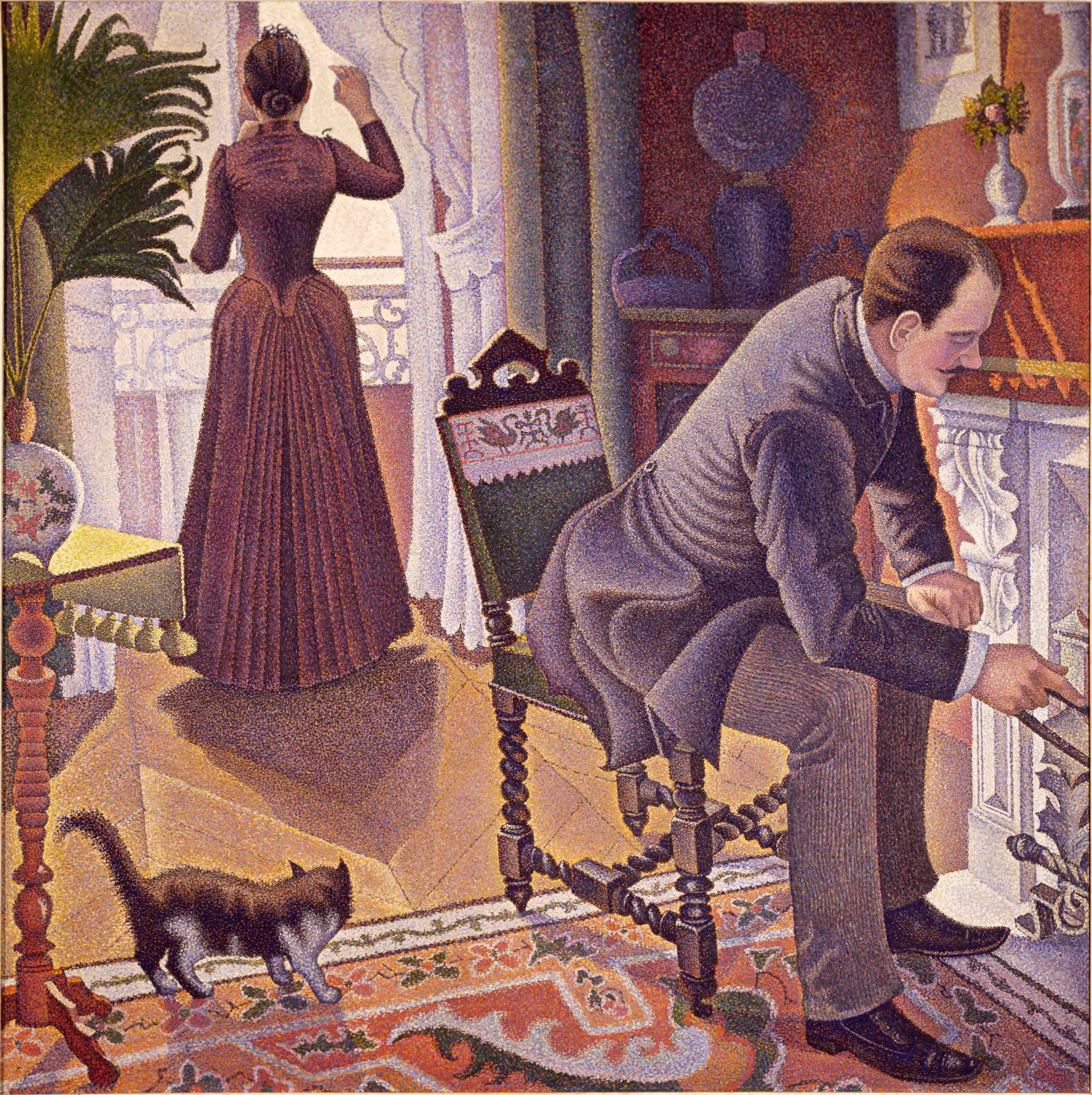
Signac applied this style to various genres. For example to portraits in which the characters, their clothing, and their environment almost seem to merge. However, Neo-Impressionism turned out to be even more effective in capturing nature, with sky, land, and sea seamlessly blending into each other. Depictions like these reiterated the ideals of the pointillists: it was their way of speaking out against advancing industrialisation. Moreover, these pastoral scenes also reflected the need for social justice and harmony.
Ports, sailing ships, and seascapes
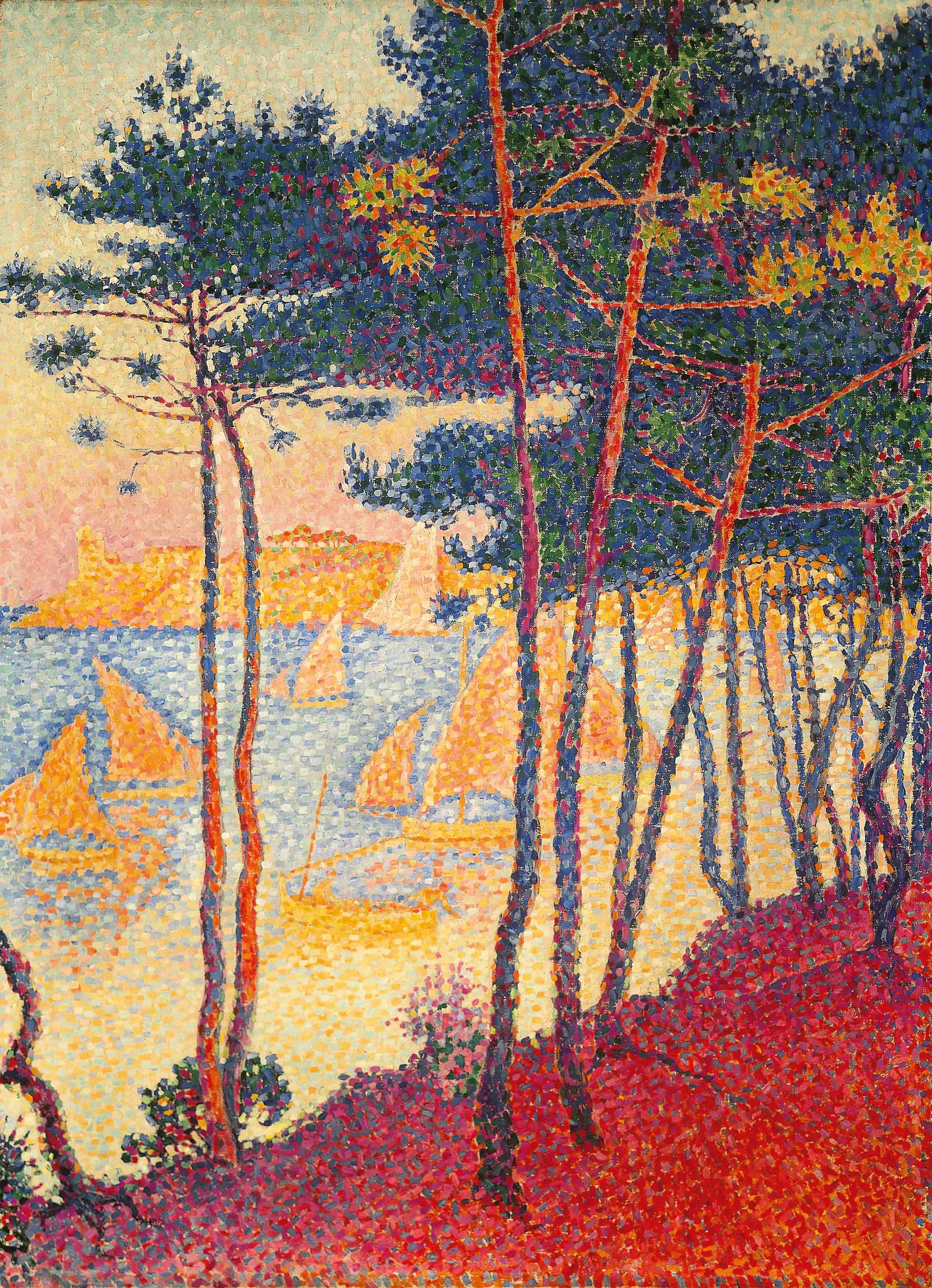
Signac was a passionate sailor. Exploring the European coastline by ship, he sailed from Normandy and Brittanny to Belgian and Dutch ports, and even to the Southern Mediterranean. These influences are clearly visible in this work: ports, sailing ships, and seascapes are at the heart of his oeuvre. He was especially inspired by the time he spent in Saint-Tropez, which at that time was still a quiet town. Here his pointillist style of painting proved perfect for capturing the glistening sunlight on the water, as is obvious from paintings like Le Port au soleil couchant, Opus 236 (Saint-Tropez) from 1892.
Signac and the Netherlands
Signac visited the Netherlands on several occasions. The port of Rotterdam inspired him to paint multiple large canvasses, including the masterpiece Le port de Rotterdam (1907), on display in the exhibition. He was also impressed by the polders, ports, and cloudy skies in places like Amsterdam, Dordrecht, and Volendam. He furthermore painted the mill of Edam and the jetty at Vlissingen. His work served as an important source of inspiration for Dutch painter Jan Toorop (1858–1928), who introduced Neo-Impressionism in his own country. Various paintings by Toorop, including the 1889 work Les deux saules (‘Novemberzon’), are featured in the exhibition.
Signac as a key figure
The exhibition allows visitors to discover how Neo-Impressionism evolved during the 1880s, with Signac and fellow-painter Seurat as key figures. It also pays attention to the network of artists they moved around in, and zooms in on the ideological principles underpinning Neo-Impressionism: this style of painting was used to express utopian ideals. Special attention is paid to the landscapes Signac and his fellow artists painted around the Mediterranean, where the intense sunlight gave them a new awareness of the power of colour. By way of conclusion the exhibition retraces Signac’s international influence, which also reached Dutch artists.
Scientific colour theories
Following Seurat’s untimely death in 1891, Signac continued to tirelessly dedicate himself to promoting the ideological principles of Neo-Impressionism. The artists who were active in this movement drew on strict, scientific colour theories. Instead of mixing the various colours, the painters applied unmixed paint in dots and strokes right next to each other, thereby encouraging the eye of the spectator to optically blend the colours. This working method is also known as pointillism. Complementary colours – orange next to blue, red next to green – enhance each other, resulting in a vivid, vibrating effect.
National and international network
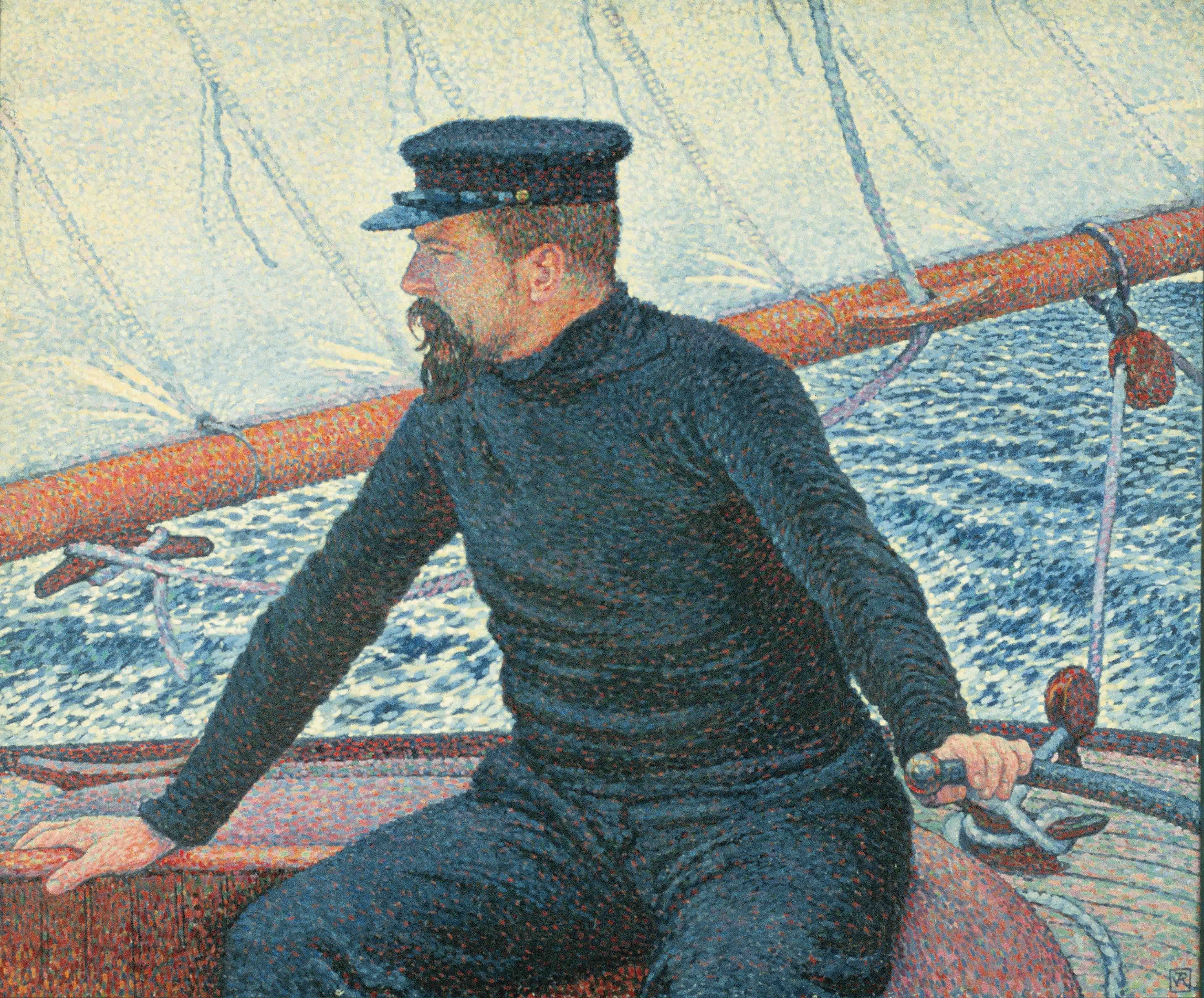
Signac’s contribution to art history transcends his own work. He was able to build a national and international network of painters, critics, and collectors. The exhibition showcases work by Belgian artists Alfred William Finch, Henry van de Velde, and Théo van Rysselberghe, who were all strongly influenced by his style of painting. Van Rysselberghe’s famous 1896 portrait Paul Signac at the Helm of the Olympia is among these works. Also shown in the exhibition are works by female Neo-Impressionist artists such as Anna Boch, Lucie Cousturier, and Jeanne Selmersheim-Desgrange, whose importance to the movement has thus far been largely ignored.
International collaboration
Signac. Symphony of Colours features over ninety works from around thirty international collections, including Musée d’Orsay in Paris, the Art Institute of Chicago, the Van Gogh Museum in Amsterdam, Museum Boijmans Van Beuningen in Rotterdam, and Archives Signac in Paris. The exhibition is realised in collaboration with Museum Barberini in Potsdam.