Kunsthal Rotterdam presents a retrospective of work by the Rotterdam artist Woody van Amen (1936). Marking his ninetieth birthday, the exhibition pays tribute to one of the most influential Dutch artists of the post-war avantgarde.
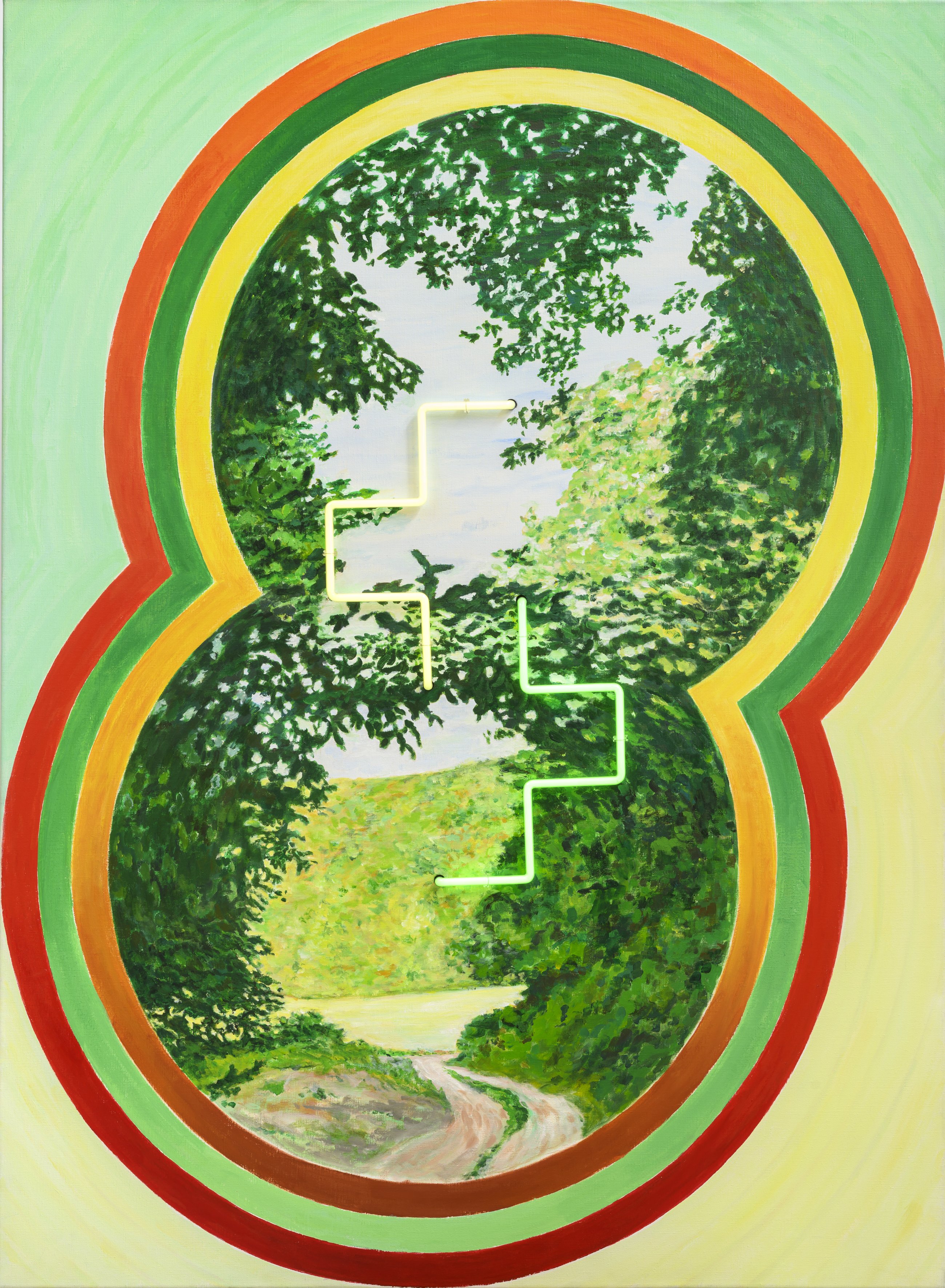
Woody van Amen. The Best of presents key pieces from his decades-spanning oeuvre and follows the developments in his work from the early 1960s onwards, as he became one of the pioneers of pop art in the Netherlands. From pop art paintings and assemblages to his iconic taxat designs: the exhibition shows how Van Amen has been constantly testing the boundaries of visual culture, technology, and spirituality. With his playful, direct, and pointed formal language, this artist has managed to stay relevant to this day.
Experiment
Habanera (1961) is a very special work by Van Amen. At the time presented as ‘the world’s longest painting’, the work was painted onto a thirteen-metre-long barrel organ book. Across the holes that determine the music, Van Amen added his own abstract, expressionist score. Gritty splashes and brushstrokes testify to the speed at which the artist attacked the concertina book.
Pop art
In the 1960s, Van Amen travelled to the United States where he met artists like Andy Warhol and Robert Rauschenberg. The art scene he encountered there was preoccupied with everyday objects, brand names, and images from consumer society. In his early work these influences are clearly visible. Van Amen for instance used well-known brand names like RVS, Philips, and Wrigley for his paintings depicting urban street scenes with neon signs, logos, and industrial shapes.
Everyday objects
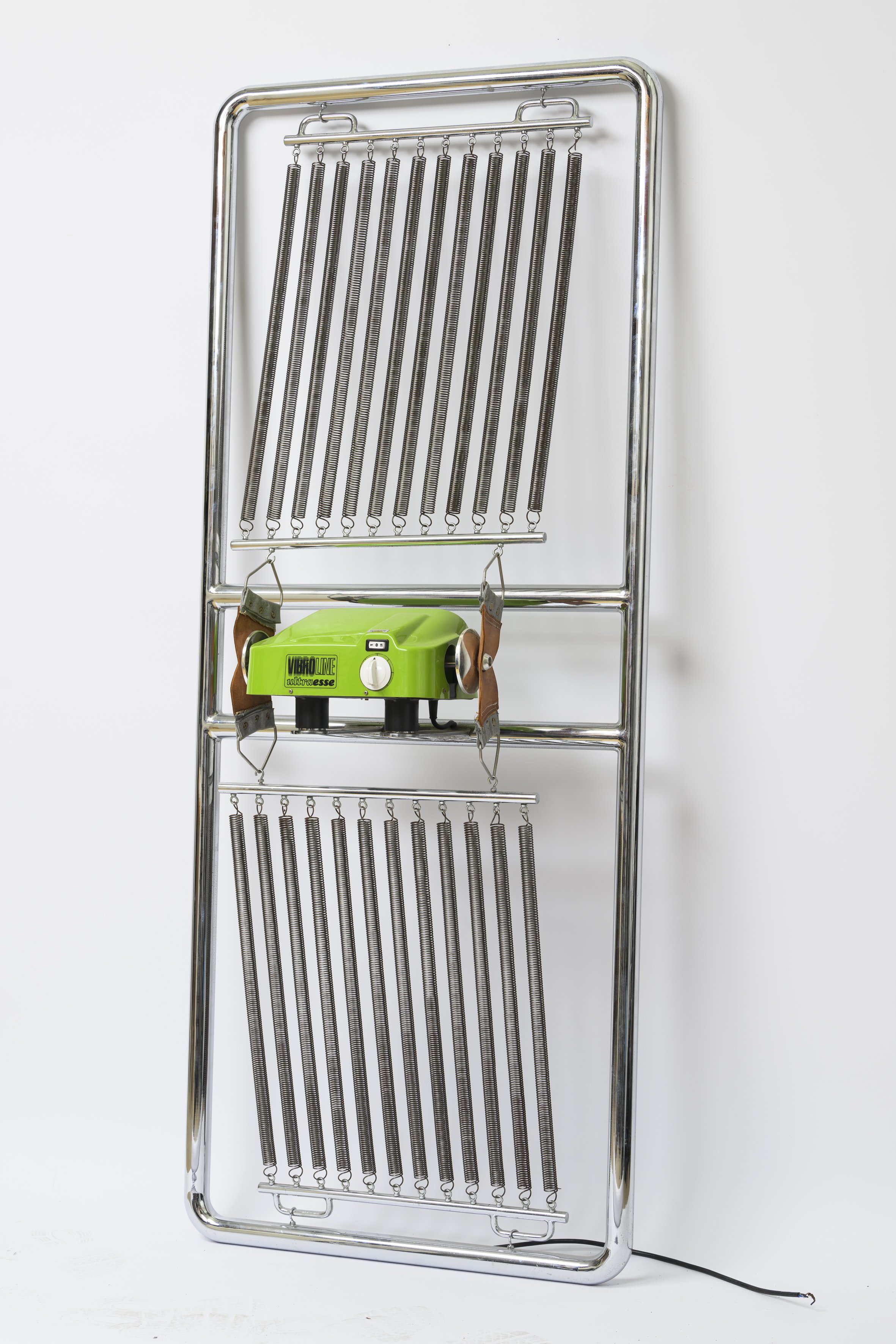
he exhibition furthermore presents a number of Van Amen’s assemblages: combinations of elements from everyday objects that move, make sounds, or even freeze things, like his iconic ice machines. Also shown are his Vibro objects: sculptures that vibrate though using small motors or mechanical components from discarded equipment. Inspired by the harsher side of American culture, the electric chair is a poignant theme in Van Amen’s work. By isolating the object, he thus turned the electric chair into an autonomous, sculptural piece.
Symbolism
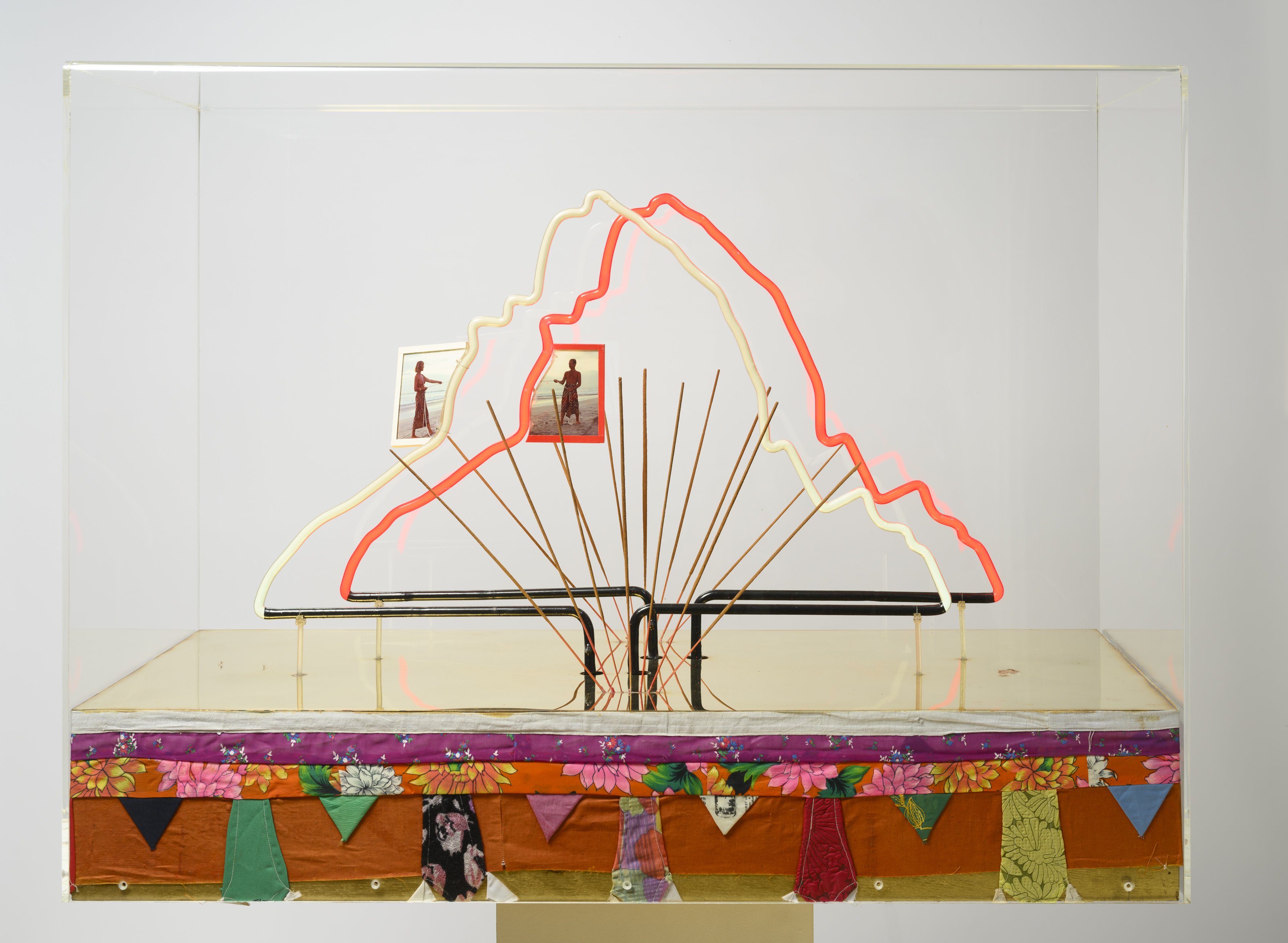
One of the most important developments in Van Amen’s oeuvre is his use of the symbols he discovered during his travels and that originally had religious connotations. His drawings of Indonesian shadow puppets and other cultural motifs reveal Asian influences. The Taxat, for instance, is one of the most familiar symbols in his work: a double cross design that he noticed in the upholstery of a Singapore taxi. The name Van Amen came up with for this design refers to the location where he found it. The symbol intrigued him so much that he even commissioned a mathematical rendering of this three-dimensional shape consisting of thirteen cubes. The characteristic summit of the Swiss Matterhorn is another recurring symbol in his work, as are Nepalese prayer flags.
Collaboration
The exhibition is a collaboration between Kunsthal Rotterdam, Woody van Amen, and—at the initiative of EENWERK founder Julius Vermeulen—guest curator Irma Boom.
Press